

Cubital tunnel surgery may be recommended when pressure on the ulnar nerve causes persistent numbness, tingling, hand weakness, or difficulty with daily activities. This guide explains how to prepare for the procedure, what to expect during recovery, and which symptoms may require medical attention.
Cubital tunnel syndrome occurs when the ulnar nerve becomes compressed or irritated near the elbow. Surgery is generally considered when nonsurgical treatments do not provide sufficient relief or when symptoms suggest progressive nerve damage.
Understanding Cubital Tunnel Surgery
Cubital tunnel surgery reduces pressure on the ulnar nerve to protect hand and arm function. The surgical technique is selected based on the severity of nerve compression, the patient’s anatomy, symptoms, test results, previous treatments, and overall health.
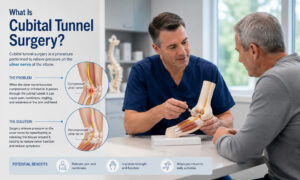
What Is Cubital Tunnel Surgery?
Cubital tunnel surgery relieves pressure on the ulnar nerve at the elbow. Common procedures include releasing the tissue around the nerve, moving the nerve to a safer position, or removing a small portion of bone to reduce tension. The best technique depends on the patient’s anatomy, symptoms, and surgical needs.
Why Is This Procedure Performed?
The operation is performed to reduce ongoing pressure or tension on the ulnar nerve. Prolonged compression can interfere with the nerve’s ability to transmit signals between the spinal cord, forearm, and hand. Early symptoms often include intermittent tingling or numbness. More advanced compression may cause constant sensory changes, reduced grip strength, poor finger coordination, or wasting of small hand muscles.
Surgery may be discussed when:
- Symptoms continue despite activity changes, nighttime splinting, or other conservative measures.
- Numbness becomes persistent rather than occasional.
- Hand weakness affects gripping, typing, buttoning clothes, or opening containers.
- Electrodiagnostic testing indicates significant nerve dysfunction.
- Muscle wasting is present.
- The nerve moves out of position when the elbow bends.
- Compression is caused by scar tissue, a cyst, abnormal anatomy, or a previous injury.
AAOS notes that surgical treatment is commonly considered when nonsurgical measures have not improved symptoms or when compression is severe enough to cause weakness or damage.

Conditions Commonly Treated
Cubital tunnel surgery primarily treats ulnar nerve entrapment at the elbow. Compression may be associated with repetitive elbow bending, prolonged pressure on the inner elbow, arthritis, bone spurs, previous fractures, joint swelling, scar tissue, or anatomical differences that reduce space around the nerve.
Because numbness and weakness can also originate in the neck, wrist, or another part of the nerve pathway, an accurate diagnosis is essential. Cervical nerve compression can sometimes produce symptoms that resemble an elbow nerve disorder. Procedures such as laminotomy and foraminotomy address spinal nerve compression and are different from cubital tunnel release. A specialist may evaluate the neck, shoulder, elbow, wrist, and hand before determining where the nerve is affected.
Potential Benefits
Potential benefits of surgery may include:
- Reduced tingling and numbness
- Decreased irritation around the inner elbow
- Prevention of additional nerve damage
- Improved grip or pinch strength
- Better finger coordination
- Greater comfort when bending the elbow
- Improved ability to work, sleep, drive, or complete daily activities
Surgery releases pressure but cannot guarantee that a damaged nerve will recover completely. Sensory improvement may occur gradually because nerves heal more slowly than skin or muscle. Patients with mild or moderate compression often have a better chance of meaningful recovery than those with long-standing weakness or severe muscle atrophy. In advanced cases, the main benefit may be preventing further deterioration rather than fully restoring lost function.

Common Symptoms Before Surgery
Symptoms vary according to the severity and duration of ulnar nerve compression. They may initially appear only when the elbow remains bent for a long time, such as while sleeping, driving, holding a telephone, or working at a desk. Over time, symptoms may become more frequent and interfere with hand strength or coordination. Mayo Clinic identifies pain, weakness, numbness, and possible muscle atrophy among the problems associated with cubital tunnel compression.
Common symptoms include:
- Numbness or tingling in the little finger
- Numbness along the ulnar side of the ring finger
- Aching pain near the inner elbow
- Symptoms that worsen when the elbow is bent
- Hand weakness
- Reduced grip strength
- Difficulty spreading or bringing the fingers together
- Trouble with buttons, zippers, writing, or typing
- Dropping objects unexpectedly
- Hand fatigue during repetitive activities
- Sleep disruption caused by numbness
- Visible loss of muscle between the thumb and index finger in advanced cases
- Reduced coordination during fine hand movements
Muscle tightness elsewhere in the upper back, shoulder, or arm may coexist with nerve symptoms but does not necessarily mean the cubital tunnel is the only pain source. Treatments such as trigger point injections target painful muscle trigger points; they do not release an entrapped ulnar nerve. A careful evaluation helps distinguish nerve compression from muscular pain and other conditions.

Preparing for Cubital Tunnel Surgery
Preparation can help reduce avoidable risks and make the first days of recovery more comfortable. Your surgical team will provide instructions based on the exact operation, anesthesia plan, medical conditions, and medications. Follow those individualized directions even when they differ from general online guidance. Contact the office before surgery when instructions are unclear rather than making medication, fasting, wound-care, or activity decisions independently.
Medical Preparation
Before the procedure, the surgeon may review:
- The pattern and duration of symptoms
- Hand strength and sensation
- Elbow stability and range of motion
- Previous fractures, injuries, or operations
- Nerve conduction study or electromyography results
- Ultrasound, X-ray, or MRI findings when indicated
- Diabetes, thyroid disease, kidney disease, or other conditions
- Smoking or nicotine use
- Allergies and previous reactions to anesthesia
- Current medications and supplements
Routine laboratory tests are not required for every healthy patient, but blood tests, an electrocardiogram, or medical clearance may be requested based on age, health history, anesthesia requirements, and facility protocols.
Nerve conduction studies measure how quickly electrical signals move through the nerve. Electromyography evaluates electrical activity in muscles. These studies may help confirm the location and severity of compression, although the diagnosis also depends on the clinical examination.
Medications to Discuss
Give the surgical team a complete list of prescription medications, over-the-counter products, vitamins, herbal products, and supplements. Some may increase bleeding risk, affect anesthesia, or alter blood sugar.
Medications that may require special instructions include:
- Anticoagulants or blood thinners
- Aspirin
- Nonsteroidal anti-inflammatory drugs
- Diabetes medications
- Insulin
- Weight-management medications
- Corticosteroids
- Certain vitamins or herbal supplements
- Sedatives or prescription pain medications
Do not stop a blood thinner, aspirin, diabetes medicine, or another prescribed treatment without approval from the clinician who manages it and the surgical team. The risks of continuing or withholding a medication differ from patient to patient.
Preparing Your Home
Most patients return home on the day of surgery, although this depends on the procedure and medical needs. Because one arm may be sore or restricted, prepare your environment in advance.
Consider the following:
- Place frequently used items between waist and shoulder height.
- Prepare meals that are easy to open and reheat.
- Choose clothing with loose sleeves and simple fasteners.
- Move rugs, cords, and clutter that could cause a fall.
- Set up a comfortable place where the arm can be elevated.
- Keep prescribed medications and water within easy reach.
- Arrange transportation home.
- Ask a responsible adult to remain available during the first night if required.
- Plan help with childcare, pets, cooking, and household tasks.
- Move work materials to an ergonomic location.
You will not be able to drive yourself home after anesthesia or sedation.
Night Before Surgery
Follow the facility’s instructions regarding when to stop eating and drinking. Fasting rules depend on the anesthesia plan and may distinguish between solid food and clear liquids. Do not assume that “nothing after midnight” applies unless that is what your team specifically instructed.
The night before surgery:
- Confirm the arrival time and facility address.
- Follow showering or antibacterial soap instructions.
- Remove jewelry as directed.
- Avoid lotions, perfumes, or deodorant when instructed.
- Prepare identification, insurance information, and medication lists.
- Wear loose, comfortable clothing with wide sleeves.
- Arrange transportation and postoperative support.
- Take only medications approved by the surgical team.
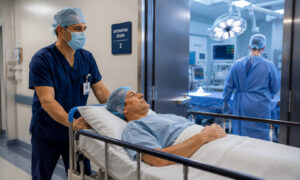
What to Expect on Surgery Day
Surgery-day routines are designed to confirm the correct patient, procedure, operative site, medication plan, and anesthesia approach. Staff members may ask the same questions more than once as part of standard safety checks. The exact sequence varies by hospital or ambulatory surgery center, but most patients complete registration, preoperative nursing assessment, anesthesia evaluation, site verification, surgery, and recovery-room observation before discharge.
Hospital or Surgical Center Arrival
Arrive at the time provided by the surgical facility. Registration may include verification of your name, date of birth, insurance information, emergency contact, and a responsible adult who will drive you home.
Check-In Process
In the preoperative area, a nurse may:
- Review allergies and medications
- Check vital signs
- Confirm fasting compliance
- Start an intravenous line
- Ask about recent illness, fever, wounds, or health changes
- Provide a surgical gown
- Confirm the correct arm and procedure
Tell the team immediately about a recent respiratory infection, skin infection, new medication, chest discomfort, pregnancy possibility, or other meaningful health change.
Anesthesia Overview
Cubital tunnel release may be performed with general anesthesia, regional anesthesia, local anesthesia with sedation, or a combination. A regional block temporarily numbs part or all of the arm. The anesthesiologist will consider your health history, surgical technique, preferences, and facility protocols.
Temporary numbness or heaviness from a nerve block can last beyond the operation. Protect the arm from pressure, heat, cold, or accidental injury until normal sensation and control return.
Surgical Preparation and Procedure Duration
The surgical team cleans the skin and positions the arm. The surgeon then releases the constricting tissue around the ulnar nerve. When necessary, the nerve is moved to a new position or another decompression technique is used.
The operation itself may be relatively brief, but total facility time is longer because of registration, anesthesia preparation, surgery, and recovery monitoring. Ask the surgeon for an estimate based on the planned technique rather than relying on a general timeline.
Recovery Room
After surgery, the recovery team monitors breathing, blood pressure, heart rate, pain, nausea, circulation, and hand movement. The elbow may be covered with a soft dressing, bulky bandage, or splint. Before discharge, patients typically receive written instructions addressing medication use, elevation, movement, wound care, follow-up, and emergency contact information.

Understanding the Recovery Process
Recovery after cubital tunnel surgery depends on the operation performed, the severity of preoperative nerve damage, the patient’s overall health, and the physical demands placed on the arm. Incision soreness may improve within days or weeks, while numbness and weakness can take substantially longer because nerve recovery is gradual. A temporary increase in tingling does not always indicate a complication, but new, severe, or rapidly worsening neurological symptoms should be reported.
Immediate Recovery
During the first days, patients may notice:
- Incision soreness
- Mild to moderate swelling
- Bruising
- Stiffness
- Temporary numbness related to anesthesia
- Fatigue
- Difficulty using the operated arm for household tasks
Elevating the hand and elbow according to the surgeon’s instructions may help control swelling. Move the fingers regularly when permitted. A splint may be used for several days or longer depending on whether the nerve was simply released or repositioned. AAOS notes that splinting needs can range from a few days to several weeks based on the type of operation.
Pain Management
Pain-control plans may include:
- Acetaminophen
- Prescription medication for short-term use
- Anti-inflammatory medication when approved
- Cold therapy
- Elevation
- Supportive positioning
- Gradual activity
Keep ice or cold packs away from bare skin and the incision. Follow the recommended application time. Do not apply heat to an arm that remains numb after a nerve block.
Some pain medicines can cause drowsiness, nausea, or constipation. Avoid driving, alcohol, and unsafe activities while taking sedating medication. Contact the prescribing clinician when side effects are severe or pain remains uncontrolled.
Mobility and Activity
Finger movement is commonly encouraged early, but elbow motion and lifting restrictions depend on the procedure. Follow the surgeon’s instructions regarding:
- Bending and straightening the elbow
- Lifting limits
- Gripping and repetitive hand use
- Computer work
- Driving
- Sports
- Returning to work
- Wearing a sling or splint
Avoid resting the inner elbow on hard surfaces. Do not lift heavy objects or perform forceful pulling and pushing until cleared. Early movement can help limit stiffness, but excessive activity may increase swelling and irritation.
Cubital Tunnel Surgery Recovery Timeline
Recovery varies depending on the procedure, the severity of nerve damage, and the patient’s overall health. During the first few days, rest, elevation, pain control, and arm protection are essential. Swelling, bruising, and incision tenderness are common, but light daily activities and elbow movement usually increase over the first few weeks.
Most patients gradually return to driving, work, and regular activities as mobility and strength improve, although physical jobs may require a longer recovery. Nerve function can continue improving for several months or longer, and therapy or activity modifications may be recommended to protect the elbow and support recovery.

Warning Signs and When to Contact Your Doctor
Most postoperative symptoms improve gradually, but complications can occur. Contact the surgical team promptly when symptoms are unexpected, worsening, or inconsistent with the discharge instructions. Seek emergency care for breathing difficulty, chest pain, signs of a severe allergic reaction, sudden neurological loss, or another potentially life-threatening concern.
Call your doctor for:
- Fever at or above the threshold listed in your instructions
- Increasing redness or warmth around the incision
- Pus, foul odor, or persistent drainage
- Wound separation
- Severe or rapidly increasing swelling
- Uncontrolled pain
- New or worsening hand weakness
- Increasing numbness after initial improvement
- Pale, blue, or unusually cold fingers
- Inability to move the fingers
- A dressing or splint that feels excessively tight
- Medication side effects such as repeated vomiting or severe rash
- Calf pain or swelling
- Shortness of breath or chest pain
Do not wait for a routine follow-up appointment when a serious warning sign develops.
Frequently Asked Questions (FAQ)
- How long does recovery take?
Incision discomfort and swelling often improve over the first few weeks, but nerve recovery may take several months. Patients with long-standing weakness, constant numbness, or muscle wasting may recover more slowly and may not regain all lost function.
- When can I return to work?
Return-to-work timing depends on job demands. Office work may be possible relatively early with ergonomic adjustments. Manual labor, lifting, repetitive gripping, or machinery operation often requires a longer recovery and staged restrictions.
- Is physical therapy necessary?
Formal therapy is not necessary for every patient. It may be recommended for stiffness, weakness, scar sensitivity, limited coordination, or difficulty returning to work. Follow the surgeon’s individualized rehabilitation plan.
- When can I exercise again?
Walking and lower-body activity may resume earlier than exercises involving the operated arm. Resistance training, contact sports, racquet sports, throwing, and heavy lifting require medical clearance. Progress gradually rather than testing the arm aggressively.
- Will numbness disappear immediately?
Some patients notice early improvement, while others recover slowly. Nerves heal gradually, especially after severe or long-standing compression. Temporary tingling may continue during recovery.
- Can cubital tunnel syndrome return?
Recurrence is possible but not inevitable. Scar tissue, continued pressure, nerve instability, or another compression site can contribute to persistent or recurrent symptoms. Protecting the elbow and following activity guidance may help reduce irritation.

Reviewed by Dr. Jason Billinghurst, MD
Dr. Jason Billinghurst is a board-certified orthopedic spine specialist with extensive experience treating complex spinal conditions through both conservative and surgical approaches. His clinical focus includes motion-preserving procedures, spinal reconstruction, minimally invasive techniques, and patient-centered treatment planning.
References
American Academy of Orthopaedic Surgeons. (n.d.). Cubital tunnel release. OrthoInfo.
American Academy of Orthopaedic Surgeons. (n.d.). Ulnar nerve entrapment at the elbow. OrthoInfo.
Anderson, D., Hanwright, P. J., & Shin, A. Y. (2022). A comprehensive review of cubital tunnel syndrome. Orthopedic Reviews, 14(3), 38239.
Cleveland Clinic. (n.d.). Cubital tunnel syndrome: Causes, symptoms and treatment. Cleveland Clinic.
Mayo Clinic Sports Medicine. (n.d.). Ulnar nerve/cubital tunnel syndrome.